
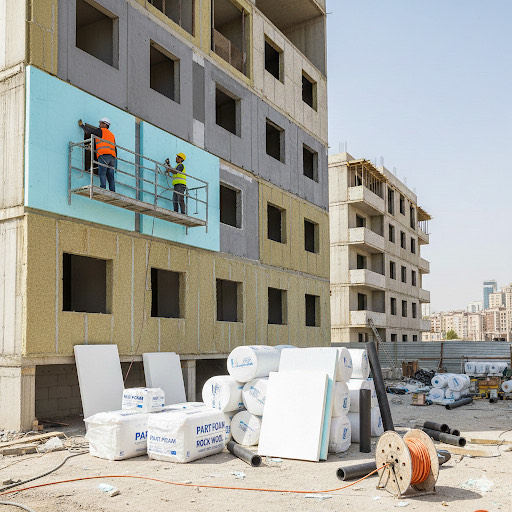
Building insulation
March 30, 2017Importance of Building Insulation
Insulation is an essential element in modern architecture, playing a vital role in enhancing energy efficiency and ensuring comfort in buildings. Proper insulation helps stabilize indoor temperatures, preventing the loss of heat during winter and keeping spaces cool in summer. Furthermore, effective insulation minimizes noise transmission, creating a peaceful living or working environment.
Types of Insulation
Building insulation can be categorized into two main types:
- Thermal Insulation: Designed to reduce heat transfer, maintaining comfortable indoor temperatures.
- Sound Insulation: Aimed at minimizing noise pollution from external sources or within the building itself.
Key Insulation Materials
-
Expanded Polystyrene (EPS)
Description: Expanded Polystyrene (EPS) is a lightweight and durable insulation material commonly used in building construction.
Applications: EPS is highly effective for thermal insulation in walls, ceilings, and floors, creating a significant barrier against heat loss. EPS sheets can also assist in insulation for partitions.
-
Elastomeric Foam
- Description: This material is known for its excellent thermal and acoustic insulation properties.
- Applications: Elastomeric foam is fire-resistant, minimizing energy loss and dampening sound transmission, making it particularly valuable for both residential and commercial buildings.
-
Polyethylene Foam
- Description: This versatile foam is widely used for insulation in various applications.
- Applications: Polyethylene foam rolls provide effective thermal insulation and are commonly used in pipe insulation, protecting against temperature fluctuations and sound transmission. This foam typically has fire-resistant options as well.
-
Rock Wool
- Description: A mineral-based insulation material known for its exceptional thermal and acoustic insulation properties.
- Applications: Rock wool is widely used in both commercial and industrial buildings due to its fire resistance and sound-dampening qualities.
Effective Insulation Through Integrated Use of Materials
Many insulation materials may not provide adequate performance when used in isolation, particularly when addressing both thermal and acoustic needs. However, by integrating different insulation types, a more effective solution can be achieved. For example, combining rock wool and elastomeric foam for wall insulation can significantly enhance soundproofing while simultaneously providing robust thermal insulation. This approach effectively mitigates sound transmission and improves the overall comfort and energy efficiency of living spaces.
Considerations for Insulation Selection and Professional Installation
When selecting insulation materials, it is crucial to consider their fire resistance. Some insulation types are inherently fire-resistant, while others are not, and certain varieties feature both options. Therefore, it is important to take into account the specific usage of the environment and ensure the chosen material meets necessary safety standards.
Moreover, building insulation is a specialized task requiring expertise. For effective and safe insulation, it is vital to follow the recommendations of a supervising engineer and obtain approval from HSE (Health, Safety, and Environmental) authorities. This ensures compliance with safety standards and best practices, leading to a successful and durable insulation solution.
Part Foam and Insulation Products
Part Foam is a leader in the production and supply of insulation products in the Middle East, particularly in Iran. They offer a range of high-quality materials designed to meet the demands of the construction industry. Their products are effective in enhancing energy efficiency and improving indoor comfort, making them ideal for various applications. With a commitment to quality, Part Foam helps builders, designers, and architects create efficient environments through their diverse insulation solutions.